“They explained what was likely causing the leak, showed photos, and set expectations about what might be found once tiles were lifted. The fix has held up through heavy rain.”
Hannah W.
Didsbury, Manchester
Enquiries: +44 20 8050 1638 · [email protected]
Weekdays 08:00–18:00 · Sat 09:00–13:00 · Sun Closed
UK roofing support with clear scope, practical checklists, and photo-led diagnostics.
5K Roofcraft focuses on targeted repairs, flat roof upkeep, and rainwater handling. We share what we check, what’s typically included, and what might change once a roof is opened up—so decisions are informed rather than rushed.
Need to describe an issue? Use our contact form to include what you see, where it appears, and when it happens (wind, heavy rain, thaw).
Roofing is rarely one-step. This timeline shows what we aim to do, what we document, and when a scope can change (for example when hidden felt or battens are exposed).
We capture symptoms (leak location, weather conditions, duration) plus access limits (rear access, loft hatch size, parking/loading).
Helpful inputs: recent storms, any prior patching, gutter overflow points, photos from ground level.
We look at roof coverings, flashings, joints, valleys, gutter fall, and typical ingress points. Where safe and accessible, we document with photos.
Output: a plain-English summary of likely causes, plus what we couldn’t verify without further opening-up (if applicable).
We outline what is included (materials/areas/finishing) and common exclusions (e.g., interior plaster repair, decorating).
If opening-up is needed, we explain the decision point and how we handle unknowns before continuing.
We confirm what was done, what was observed underneath (if accessed), and any recommended next checks (seasonal gutter clean, moss control).
You get a concise “what changed” note that’s useful for future maintenance or property records.
Use this table to gather the right details before you contact a roofer. It helps set expectations and reduces back-and-forth.
| Factor | What to note | Why it matters |
|---|---|---|
| Roof type | Pitched tiles, slate, felt/EPDM flat | Materials and detailing differ; so do typical failure points. |
| Age / known history | Approx. install date, prior patching, recurring areas | Repeated fixes can hide underlying issues (timber, ventilation, junctions). |
| Leak pattern | Only in heavy rain? Wind-driven? After thaw? | Helps distinguish overflow/flashings from condensation or capillary tracking. |
| Location of symptoms | Ceiling line, chimney breast, around dormer, near valley | Water often enters away from where it shows; junctions are key clues. |
| Access constraints | Rear alley, conservatory, steep pitch, fragile areas | Access influences safe approach and time needed. |
| Chimney & flashings | Lead condition, mortar, apron/step flashings | A common ingress point; repair might be localised if caught early. |
| Valleys & junctions | Debris build-up, broken tiles, lining wear | Valleys take concentrated water flow; small defects can cause notable leaks. |
| Ridge/hip condition | Loose ridge tiles, mortar cracks, caps | Movement can open paths for wind-driven rain; safety considerations apply. |
| Guttering behaviour | Overflow points, sagging, joint drips, downpipe blockage | Overflow can mimic roof leaks and damage masonry/fascias. |
| Loft / ventilation | Condensation, mould, insulation depth, airflow paths | Moisture can be non-leak related; fixes differ (venting, insulation, sealing). |
| Weather exposure | Coastal, high wind area, shaded/moss-prone | Affects moss growth, drying time, and which detailing is most critical. |
| Neighbouring properties | Terrace party wall, shared gutters, access agreements | Shared boundaries can impact scope, permissions, and timing. |
Tip: If you’re unsure about terms like “valley” or “step flashing”, don’t worry—describe the location in plain language and include a photo if safe. See roof repairs for examples.
This list helps keep the inspection efficient and reduces avoidable delays. Only do what’s safe and comfortable—no ladder work is required from you.
Built for clarity: each service page section explains what’s included, common limitations, and what we usually check first.

Targeted repairs for leaks, slipped tiles/slates, damaged flashing and ridge issues, with clear scope and exclusions before work starts.
Open repair guide →
Often starts with: junction checks, ridge stability, valley debris, gutter overflow verification.
Inspection and practical maintenance for felt/EPDM-type flat roofs, including detailing around outlets and edges to reduce water pooling risk.
Open flat roof notes →
Key focus: outlets, upstands, edge trims, ponding patterns, and joints at penetrations.
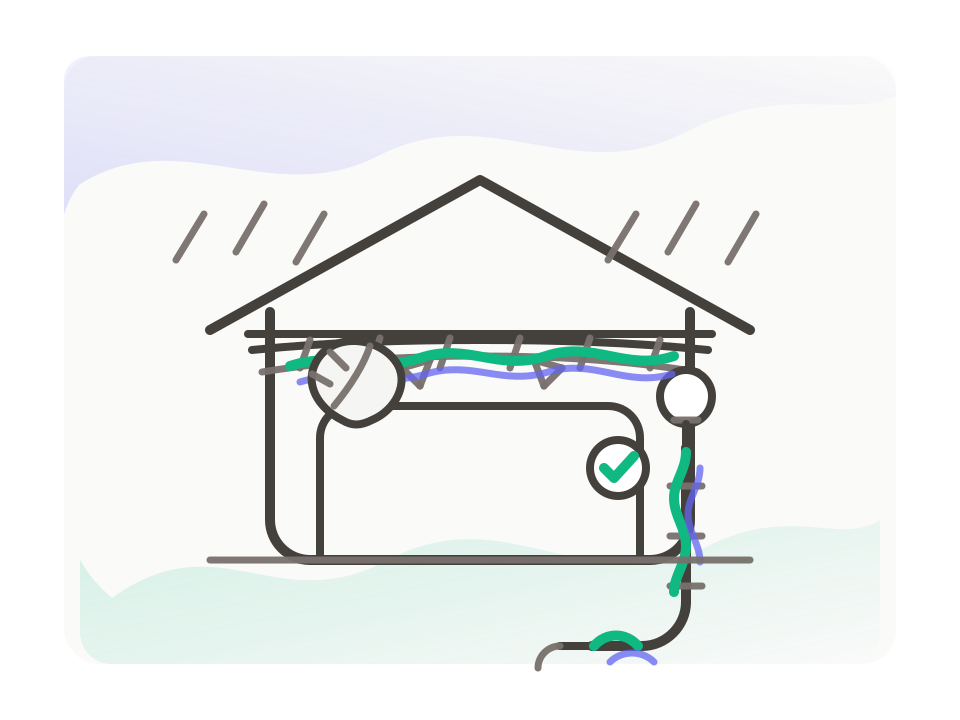
Cleaning, minor repairs and alignment checks to help rainwater move away from fascias, walls and foundations; includes downpipe checks.
Open rainwater checklist →
Useful to note: which joint drips, which run overflows, and whether water backs up at the shoe.
We prefer plain documentation: what we saw, what we did, and what might need monitoring. Here are a few recent customer notes.
“They explained what was likely causing the leak, showed photos, and set expectations about what might be found once tiles were lifted. The fix has held up through heavy rain.”
Hannah W.
Didsbury, Manchester
“Guttering was overflowing at the back of the house. They cleared the blockage, adjusted the fall, and pointed out two joints that will need replacing later. Straightforward and tidy.”
Imran K.
Chorlton, Manchester
“Booked for an inspection after buying a terrace. The report and checklist were useful, especially the notes on ventilation and moss. No pressure to upsell.”
Louise P.
Ancoats, Manchester
Want to see how we write up findings? Reviews often mention our photo notes and checklists.
Review highlights →We’re based in Manchester and take on enquiries across the UK where practical. These are common UK-specific factors we account for when discussing scope and access.
If something doesn’t match the agreed scope, we want to hear early. We follow a documented route: confirm facts, review photos/notes, and propose a practical remedy where appropriate.
See the full process and expected response times.
Use this block as a quick map: start with the page closest to your situation, then follow the next recommended link.
This form opens your email client (mailto). It validates required fields first so your message contains the essentials for a useful reply.
Please avoid sending sensitive personal documents by email. See Privacy.